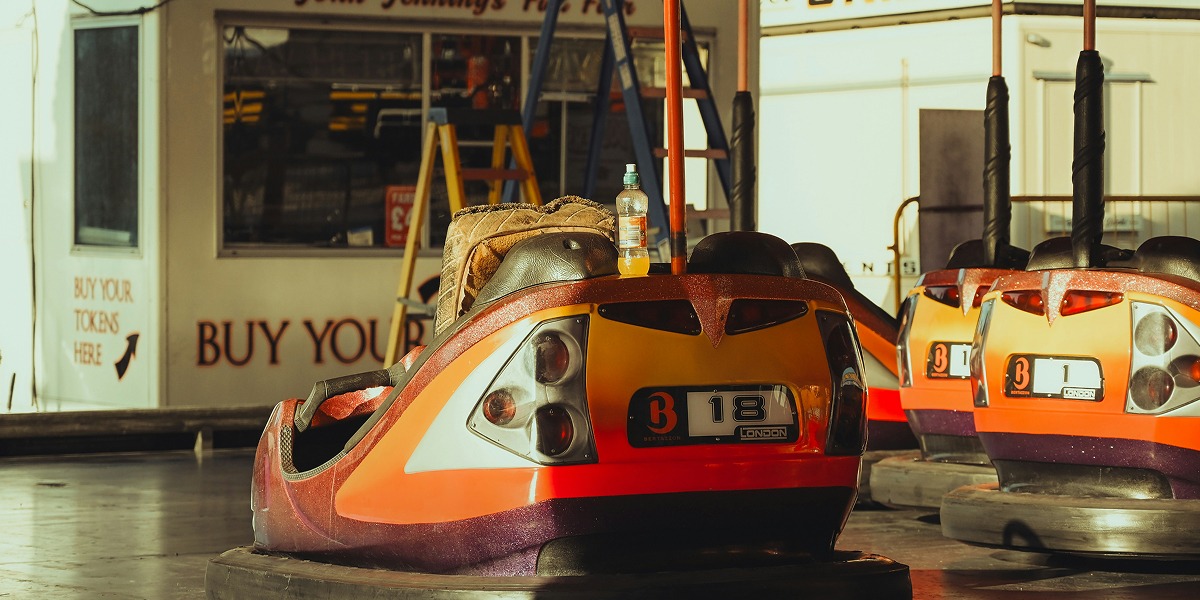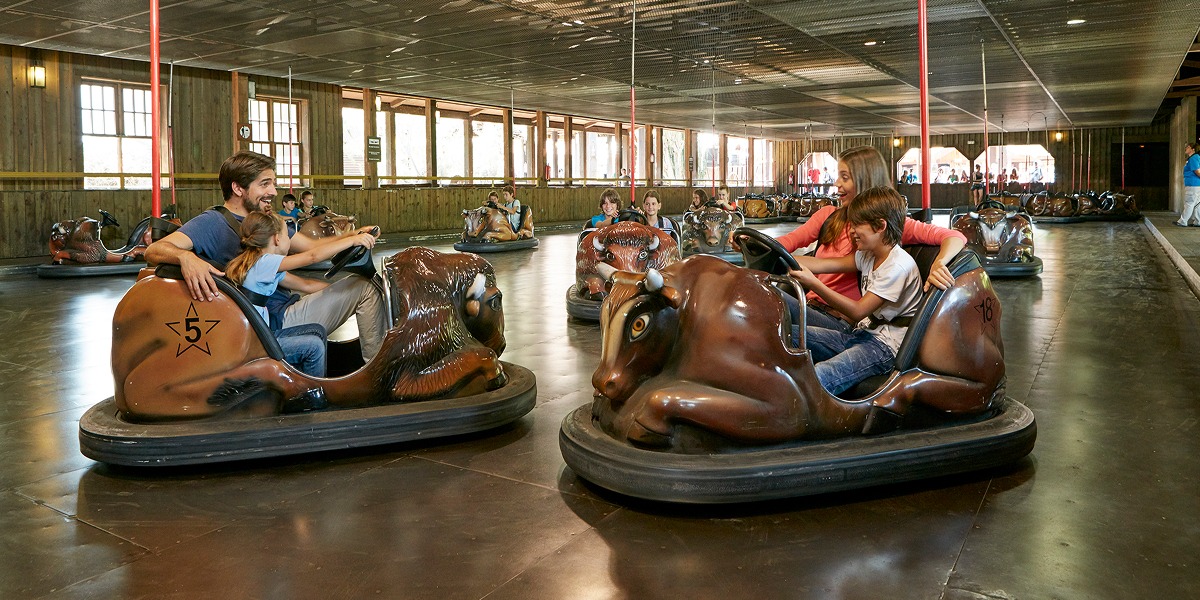



Dodgems are a part of our collective memory. As children, they were pure excitement, and as adults, pure nostalgia. But behind this popular ride lies a fascinating history and a lot more science than meets the eye.
Dodgems or bumper cars – so what are they exactly?
Whatever you choose to call them, they all refer to the same ride that has been a staple of fairgrounds and theme parks for many years. They are small electric vehicles that are driven across a metal floor and, unlike almost everything else, are actually more fun when they crash into each other.
They have been a star attraction at fairs and parks around the world for decades, alongside other classics such as the merry-go-round or roller coasters. And, although it may seem like a simple fairground ride, it is a feat of engineering that actually has its own history and trivia.
Origin and history of the Dodgems
Dodgems were invented in the United States in the early 20th century. The design was very rudimentary and they were made of metal frames, hard wheels, and an electrical system that made them very hard to control. But they worked, and that was enough to make them a sensation.
It is thought that the name evolved to bumper cars in the 1920s, when the modern version with rubber bumpers became popular and the aim of the ride was to bump into other cars, and not to “dodge ’em”. Since then, both names have been used for the same ride, which remains a fairground favourite to this day. And although the cars are safer and more colourful, the goal hasn’t changed at all: to crash without any real danger and have lots of fun in the process.
Who invented Dodgems?
It is widely believed that the inventors were Max and Harold Stoehrer, brothers from Massachusetts, who patented the first dodgem car in 1920. Dodgem was actually the name of their company and it is still used nowadays to refer to the car itself. The Stoehrers developed an electrical system with a metal bar that connected the car to the ceiling, allowing it to move when supplied with electricity.
Improvements were made to the design over the years and various versions were marketed throughout Europe under different brand names. This is how the dodgem car, as we know it, came to be: with lights, a horn, and soft bumpers that cushion each impact.
How Dodgem Cars really work
Although it seems like magic, the operation is actually down to some clever engineering. The cars run on a closed electrical circuit: the metal floor and the ceiling form the positive and negative poles, while a bar with a brush inside the car allows the current to flow. When the pedal is pressed, the electric motor activates, and the car moves.